Commercial Waffle Equipment Guide
Commercial Belgian Waffle Makers: What Matters Beyond the Shape?
A practical guide to choosing a professional waffle maker for cafés, breakfast service, dessert shops and foodservice kitchens—using the 4-square TTS-006 as a real product example.
Why choose a 4-square Belgian waffle maker?
A commercial waffle maker is not only about producing a recognizable grid pattern. In a professional kitchen, the cooking format affects portioning, plating, service speed and how easily a waffle can be divided for different menu presentations.
A four-section square format is particularly practical when a kitchen wants one full waffle that can also be separated into smaller portions. It works well for breakfast plates, dessert combinations, takeaway portions and menu items where toppings need clearly defined pockets.
A good commercial waffle setup starts with three questions: what will you serve, how will you portion it, and how consistently can the operator repeat the process?
Foodservice equipment selection principle
Portioning
Four defined sections
A square four-grid plate creates a full waffle that can be served whole or divided into individual sections.
Presentation
Deep grid pockets
Belgian-style pockets give sauces, fruit, cream and other toppings a structured surface to sit on.
Workflow
Repeatable plate format
A fixed mold helps operators produce the same basic waffle size and shape from one cycle to the next.
For commercial use, the controls and plate design matter as much as wattage.
Rated power is useful information, but it does not tell the whole story. When comparing commercial waffle makers, it is also important to look at temperature control, timing control, plate material, non-stick performance, handle design, body construction and the electrical standard required at the installation site.
Batter formulation also affects the finished waffle. Sugar, fat, viscosity, portion size and cooking temperature can all change browning, release and texture. A machine should therefore be evaluated together with the recipe and the intended service style.
iPractical point: the same waffle maker can produce different results with different batters. Final time and temperature settings should be established through recipe testing rather than copied blindly from another kitchen.
03 · Reference model
TTS-006
Product specifications from the referenced product page.
What the TTS-006 design tells us about everyday operation.
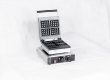
The TTS-006 combines a stainless-steel outer body with non-stick aluminum cooking plates. Its product page also lists temperature adjustment, a timer control, indicator lights and a heat-resistant handle—features intended to make the bake cycle easier to manage in repeated foodservice use.
Temperature thermostat
Adjustable heat gives the operator a way to tune browning and cooking behavior for a specific batter.
Timer control
A dedicated timer helps standardize the operator’s bake routine instead of relying only on visual checks.
Non-stick aluminum plates
The product uses cast aluminum cooking plates with a non-stick surface to support waffle release and routine cleaning.
Heat-resistant handle
The handle is designed to reduce heat transfer to the contact area used when opening and closing the waffle maker.
Stainless-steel body
The listed 201 stainless-steel exterior provides a commercial-style housing around the cooking assembly.
Indicator lights
Visual indicators give the operator a simple reference while the machine is heating and being used.
A simple commercial waffle routine is easier to repeat.
The exact cooking time and temperature depend on the batter, but the operating logic is straightforward. Establishing a consistent routine makes training easier and helps reduce variation between operators.
Preheat the cooking plates
Set the working temperature and allow the plates to reach a stable cooking condition before starting service.
Measure the batter portion
Use a repeatable volume or weight so the mold is filled consistently without unnecessary overflow.
Close, time and bake
Use the thermostat and timer as process controls, then fine-tune settings around the actual recipe.
Remove and finish the waffle
Release the waffle carefully, add toppings or sides, and prepare the plates for the next cycle.
Non-stick plates still need a careful cleaning routine.
A non-stick surface can simplify waffle release, but it should not be treated like an uncoated metal plate. Cleaning methods should protect the cooking surface and avoid unnecessary scratching.
01
Disconnect and cool
Switch off and unplug the unit before routine cleaning, then allow cooking surfaces to cool to a safe temperature.
02
Remove loose residue
Wipe away crumbs, batter residue and excess oil with tools and cloths suitable for a non-stick surface.
03
Avoid abrasive tools
Do not use aggressive metal scraping tools that can damage the non-stick coating.
04
Keep controls dry
Clean the exterior without allowing water to enter electrical controls, connections or internal components.
Seven questions to answer before buying a commercial waffle maker.
Choosing the right machine is easier when the decision starts with your actual menu and operating conditions rather than with appearance alone.
Square, round, Brussels-style, Liège-style or a custom mold can lead to very different presentations.
Think about how one finished waffle will be plated, divided and sold during peak service.
Sugar, fat, viscosity and inclusions can affect release, browning and cleaning requirements.
A timer can make repeatable training and process control easier during busy service.
The TTS-006 is listed in 220V 50Hz and 110V 60Hz versions; confirm the destination electrical standard.
Check machine dimensions as well as clearance for opening the lid and working around the unit.
Make sure the plate finish, surrounding surfaces and daily cleaning routine fit your kitchen operation.
✓For the TTS-006: confirm the required voltage, expected daily volume, batter type and preferred waffle portion before ordering. Those details are more useful than selecting a machine from wattage alone.
The best commercial waffle maker is the one that fits the menu and the operator.
A four-square Belgian waffle maker is a relatively simple piece of equipment, but the buying decision still benefits from a process-focused approach. Mold format, controls, recipe, electrical supply, cleaning method and service volume should all work together. The TTS-006 provides a useful example of a compact commercial unit built around a four-section square plate, adjustable temperature and time control, and a non-stick aluminum cooking surface.
Frequently asked questions about commercial Belgian waffle makers.
What is the difference between a Belgian waffle maker and a standard waffle maker?
Belgian-style waffle makers generally use deeper grid pockets, producing a waffle profile designed to hold toppings and fillings more easily. Exact dimensions and grid depth vary by mold.
How many waffle sections does the TTS-006 make?
The referenced TTS-006 mold produces one square waffle divided into four grid sections.
What is the power rating of the TTS-006?
The product specification lists a rated power of 1230 watts.
What voltage versions are listed?
The product page lists 220V 50Hz and 110V 60Hz versions. The correct electrical configuration should be confirmed before ordering.
Are the cooking plates non-stick?
Yes. The referenced product page describes the cooking plates as non-stick aluminum.
Does it have temperature and time controls?
Yes. The TTS-006 is listed with an adjustable temperature thermostat and timer control.